Josephine
Josephine
2016-2025
Leporidae, dimensions variable
The project Josephine was conceived as a meditation on the ‘frame’—not the physical frame of a painting, but the ‘ultimate, finite frame of a lifespan’. The artwork’s core premise was built on a temporal transition: ‘While alive, a work of art, and when dead, a part of art history’.
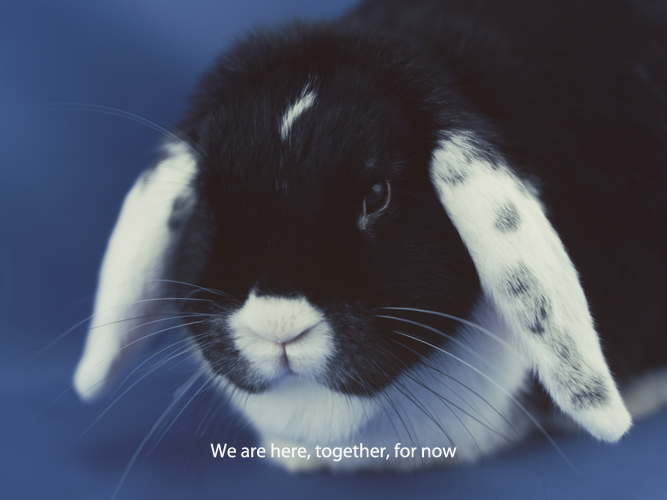
The photographic work Still from ‘Pixelated Venus’ (2017) functions as a key component within this overarching project. Depicting the living rabbit Josephine, it is subtitled with the phrase, ‘We are here, together, for now’. This text directly explores this core thesis, meditating on the multiple finite frames at play: the artwork’s own lifespan, the spectator’s lifespan, and the limited duration of their shared encounter before this living ‘act’ transitions into history.
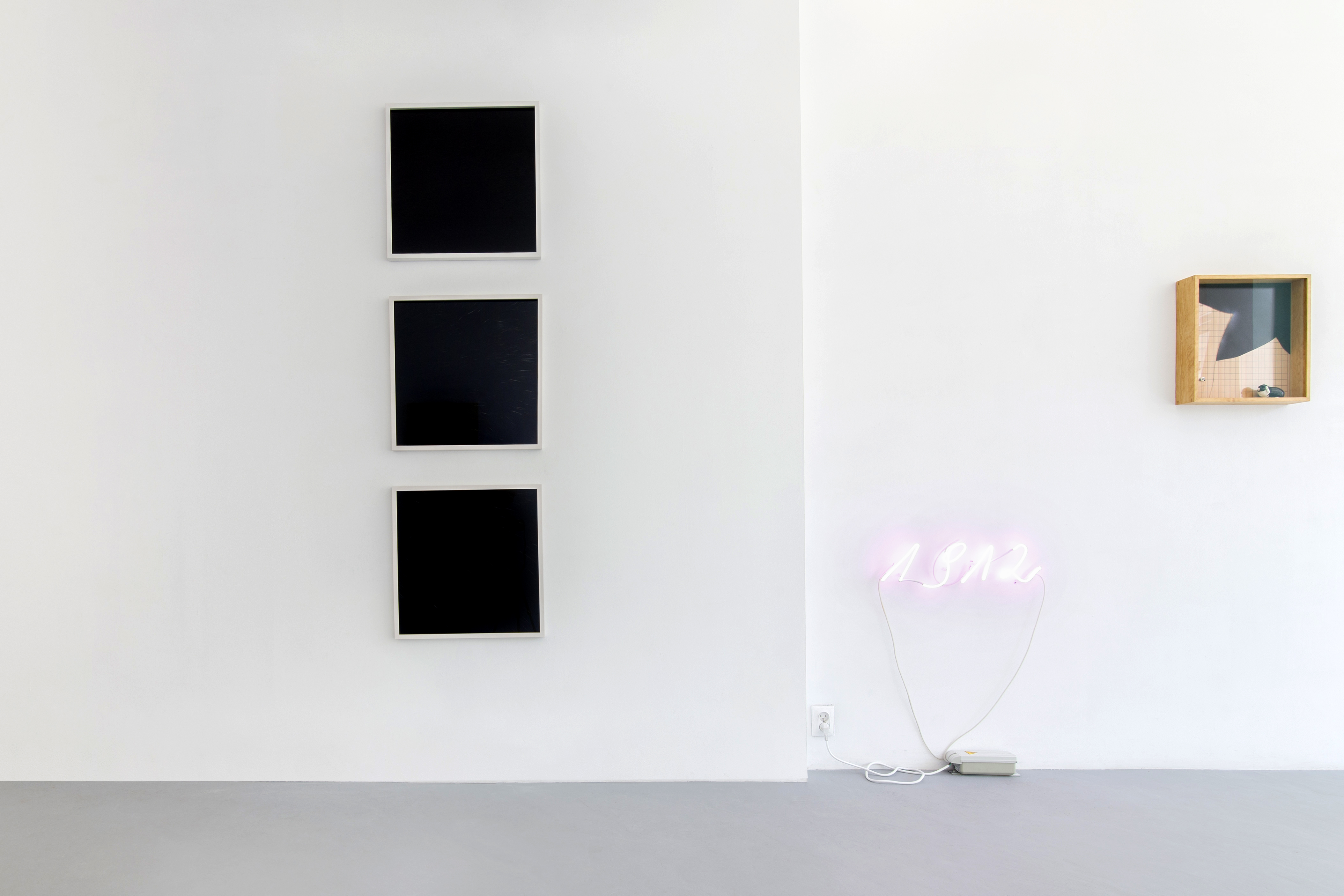
The title of the photograph, Still from ‘Pixelated Venus’, implies it is a frame from a film (which the artist conceptually decided to keep unREALised). This establishes a primary conceptual conflict. It juxtaposes ‘Venus’, the classical icon of life, with ‘pixels’, or ‘picture elements’, that in the form of tiny squares constitute the contemporary image. This immediately places Josephine, the symbol of ‘life, freedom, and the potential for historical agency’, in direct dialogue with her conceptual antithesis: Kazimir Malevich’s Black Square.
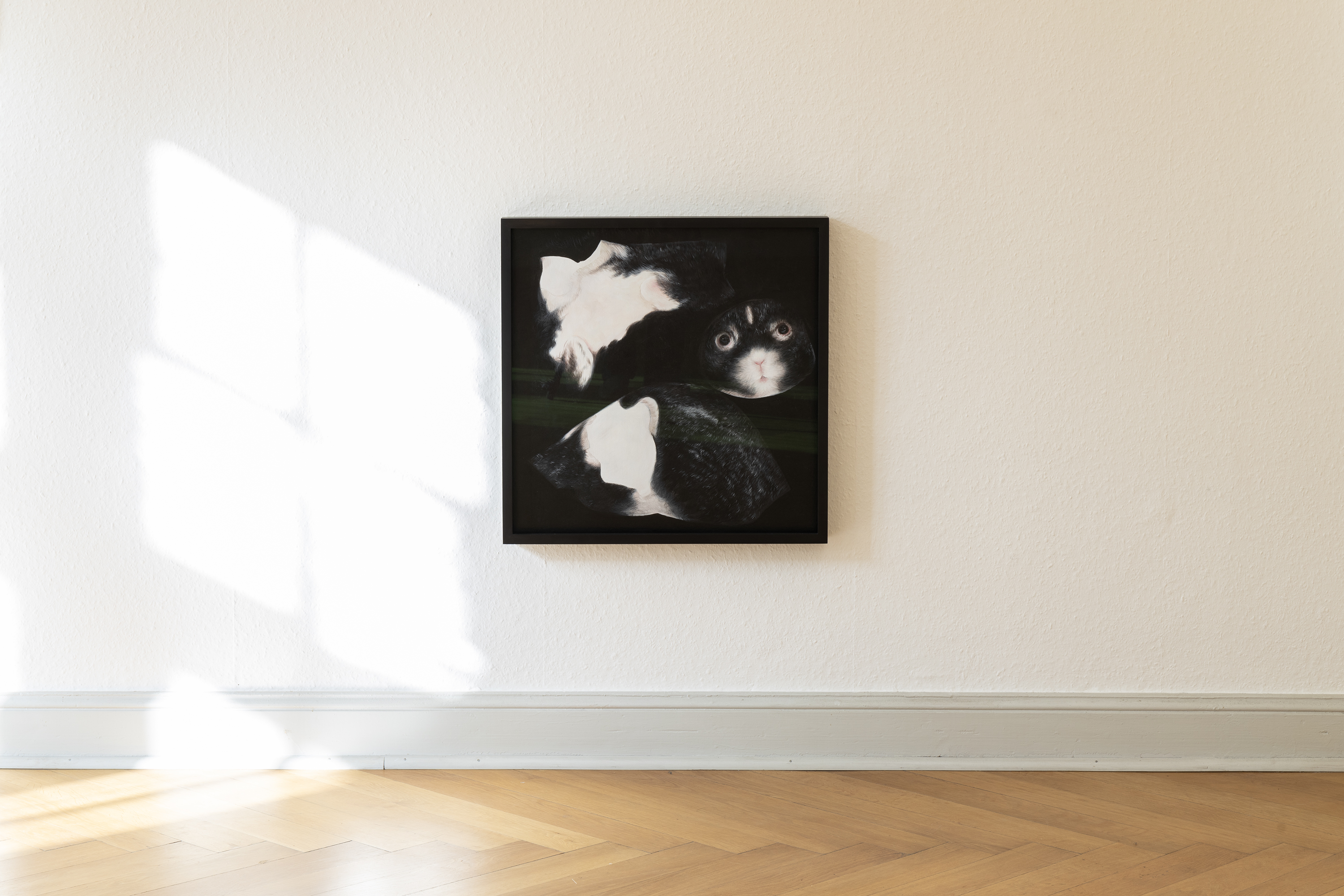
The painting Return of the Real (2020) illuminates the ‘pixelation’ of Venus as an act of profound ‘technological mediation’. In the painting, the ‘real’ (Josephine) is ‘subjected to the violence’ of a 3D scanner, its form ‘fragmented and distorted by the cold logic’ of the machine. This act of ‘technological objectification’—fragmenting a living body into digital data—is presented as a ‘violence inherent… in the seemingly neutral tools of technology’.
Pixelated Venus, therefore, is not merely a visual metaphor; it refers to this ‘fragmentation of the human subject in the face of technological dominance’. This fragmented body is then ‘subverted’ onto the dimensions of the Black Square, suggesting a critique of a ‘new materialist metaphysics’ that, in its attempt to represent reality, ultimately ‘objectifies and dehumanises’.
In this specific photograph from Still from ‘Pixelated Venus’, the text ‘We are here, together, for now’ transforms the portrait into a complex memento mori. It defines the hermeneutic encounter as a state of triple contingency: the Contingency of the Encounter (the limited ‘here and now’ of observation), the Contingency of the Spectator (their own finite lifespan), and the Contingency of the Work of Art (Josephine’s own limited life). The phrase ‘for now’ is the poignant acknowledgment of this shared, fleeting existence.
The Josephine project came to its completion in 2025, its conceptual ‘frame’ now being closed. The ‘for now’ has expired. For nine years, Josephine existed as an actio, an ‘active’ and living entity. Her passing concludes this actio, finalising the work’s transition into history.
The photograph has become a historical object. It is the ‘trace’, the ‘shadow of this readymade’, that ‘remains’.
Through her mortality, Josephine achieves what the material Black Square cannot. The Square, as a physical painting, is subject to material decay—its ‘myth’ is ‘shattered’ by the physical cracks that appear on its surface. Josephine, however, by being able to disappear, creates an ‘indestructible myth’ that survives precisely because she is no longer a physical entity, but a historical one. This photograph is her testament. She has been ‘saved’ from the material world by entering the historical ‘ongoing flux’, a myth that now unites her, this image, and our collective memory of ‘being together’, if only ‘for now’.